
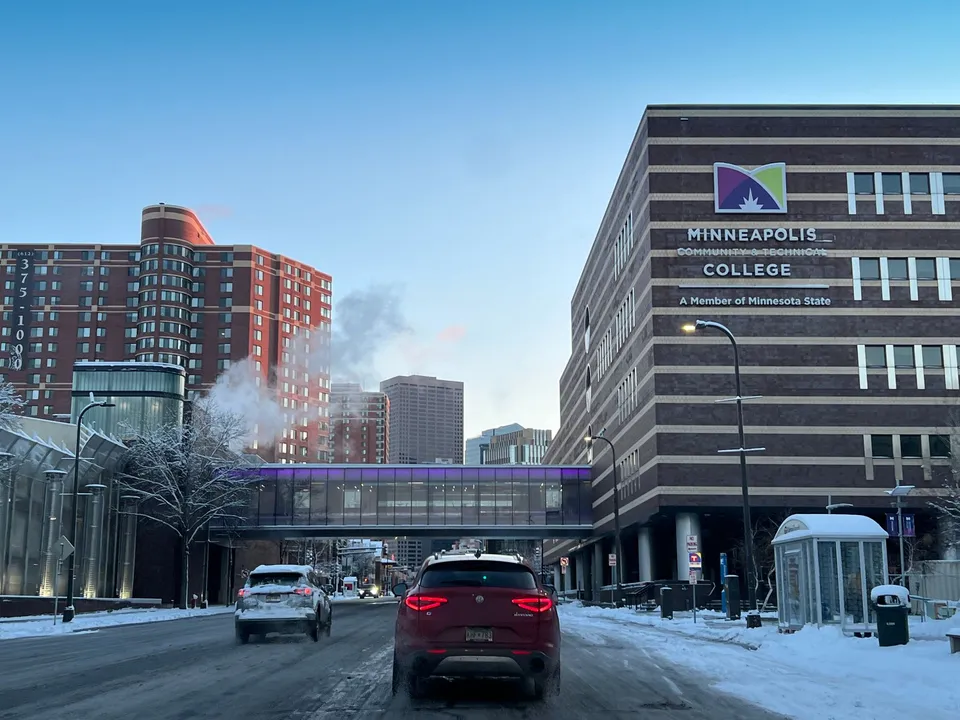
If you are applying in Minneapolis, your real question is not only “What does the job pay?” It is also “What part of the city can I reliably reach on a weekday morning?” That matters here because the city’s transit spine is more than a single downtown route: Metro Transit says the METRO Blue Line runs 12 miles with 19 stations between downtown Minneapolis and Mall of America in Bloomington, and the broader METRO network now includes two light rail lines and eight bus rapid transit lines. (metrotransit.org)
Start with the corridor, not the company
That shift in thinking helps applicants and employers alike. A job in Minneapolis is often shaped by the route that serves it, not just the employer name on the sign. If you live near a strong transit corridor, or if your employer sits near one, your options widen fast. In practice, that can mean a better match between shift times, childcare drop-off, weather, and the number of minutes you are willing to spend getting to work.
The Blue Line is a real shift-work tool
For workers who start early, finish late, or travel through the airport area, the Blue Line is especially useful. Metro Transit’s map shows stations including Cedar-Riverside, Franklin Ave, Lake St/Midtown, 38th St, 46th St, Fort Snelling, and the airport terminals, and it notes that service runs 24 hours a day between Terminal 1 and Terminal 2. Metro Transit also says travelers can reach the airport from downtown Minneapolis by boarding a Blue Line train toward Mall of America. (metrotransit.org)
That does not mean every job becomes transit-friendly overnight. It does mean Minneapolis has a few corridors where a candidate can reasonably plan around a train, not just a parking space. For employers, that matters when recruiting for hospitality, healthcare support, logistics, and other roles that do not always run on a 9-to-5 schedule.
The Midtown Greenway makes south Minneapolis easier to work into a commute
Another local detail changes the picture for people who would rather bike or mix modes. The City of Minneapolis describes the Midtown Greenway as a major east-west trail in south Minneapolis, and city planning documents say the corridor is 5.5 miles long and follows a former railroad right-of-way. The city also notes that the trail is owned and maintained by the city, while the underlying land is owned by the Hennepin County Regional Railroad Authority. (www2.minneapolismn.gov)
That matters because the Greenway is not just scenery. It is a continuous piece of transportation infrastructure, which gives nearby neighborhoods a different kind of reach than a block-by-block street route does. For a worker choosing where to rent, that can make south Minneapolis feel less fragmented and more connected. For an employer, it can help explain why some candidates will consider a site that looks “too far” on a map but sits near a bikeable or bus-connected corridor.
Frequent buses fill in the gaps
Metro Transit defines frequent local buses as routes that serve all stops and operate at least every 30 minutes during middays on weekdays, with more service at rush hour. That matters because many job sites are not on rail at all; they depend on the bus network to make the last mile work. (metrotransit.org)
This is where Minneapolis becomes easier to live in than outsiders sometimes expect. If a candidate can combine a frequent bus with a short walk, or a bus with the Blue Line, the job search expands well beyond the core downtown grid. That can be a meaningful difference for applicants who are balancing school, family obligations, or a second job.
What applicants should look for
The most useful question is not “Is this job in Minneapolis?” but “Which route makes this job realistic for me?” Before you apply, check whether the worksite sits near a Blue Line station, a frequent bus route, or a trail connection you could use part of the year. If the commute only works when everything goes perfectly, that is a warning sign. If it works in January as well as June, that is a stronger fit.
What employers should notice
Employers can use the same logic when they write job posts and build shifts. A posting that names the nearest station, route, or corridor gives candidates a concrete way to picture the commute. A schedule that respects transit frequency can also widen the pool of people who can say yes. In a city with rail, frequent buses, and a trail network that ties neighborhoods together, location is part of the job design.
Minneapolis does not erase the commute. It gives job seekers more ways to make the commute work.
If you are looking for your next move, start by mapping the route before you map the company. If you are hiring, think about whether your workplace description helps people understand how they will actually get there.